Showing posts with label Reading. Show all posts

Saturday, January 25, 2025

The Duty of the Octogenarian

 As one reaches my age, there is a sense of responsibility to be diligent in passing along hard-learned lessons in living. We see our grandchildren and their friends beginning to make the decisions that will determine the course of their lives, and we want to help them avoid setting living/thinking patterns that will lead to dissatisfaction, and unhappiness in their personal lives. We want them to see the value that their personal choices have in the continuation of a prosperous and functioning culture. Also, we are aware that many (most?) twenty-somethings and thirty-somethings have been taught by society that all opinions and ideas are equally valuable, and they don't need to listen to anybody else's input in their decision-making (a catastrophically erroneous idea).

For those willing at attend to a few life-experience opinions and recommendations, I offer these:

1. From your early days of marriage, set a pattern of real sharing with your partner. Be sure that you discuss more than just what's for dinner and who's going to mow the lawn. If you want your marriage to endure and thrive into your old age, you must KNOW this person you married. I regret that, in the hugeness of child-bearing, child-raising, and career-building, we had few discussions about what we read, what we heard in worship service, what direction we hoped to see our country move, and many other topics that would have given us insight to our partner's thinking.

2. Read regularly.

  • When you read fiction, read at least some REALISTIC fiction (as opposed to all horror, fantasy, sci-fi, or the adrenaline-inducing "action" or "erotic" novels) The reason for this recommendation is that in realistic fiction we see real people facing real problems (like some you might face) and making difficult decisions. You have the opportunity to witness and evaluate the consequences of various life decisions as you read the denouement of the story. How often in real like could you have the opportunity to see, ahead of your own experience, what the long-term complications of a decision might be?
  • When you read non-fiction, read about people or subjects that will give you something to admire, strive for, learn that will contribute to the success/happiness/productivity of your own life.
3. Remind yourself regularly that the only way to improved society is to improve individuals. When you live a clean, admirable, productive, and influencial life, you are doing your part to build a good society for future generations. You have little control over how other people live their lives.

4. Recognize that old proverbs, "sayings" "folk wisdom", etc. are actually good and helpful to remember and consider. They endured through generations because people through generations recognized their truth. Some of these include famous bible verses, quotes from great thinkers of the past, such as C.S. Lewis, Aristotle, Plato, Socrates, Abraham Lincoln, and many others.

5. I will add to this as I think of things that I consider really important.

Wednesday, January 08, 2025

Three Little Lies by Danielle Stewart - a Netgalley Review

Three Little Lies is a very engrossing read from the very beginning! There is no time lost getting into the story; the author grabbed the reader right at the start. The characters are fully drawn and very engaging, the story line is easy to follow and clearly presented. The book continues at a lively pace throughout, with each new development in the story increasing the suspense and building the reader's engagement with the characters and their dilemma. There are unexpected twists in the story right up until the very end. I must say that the ending doesn't follow logic and was very disappointing to me as a reader, seeming somewhat contrived and agenda-driven instead of following the tone set by the rest of the novel. Still, overall, I enjoyed getting acquainted with these characters and seeing their story unfold.  

Sunday, January 01, 2023

Reading in 2022

 Since I started keeping track of the books I read on Goodreads in 2009, I have read and recorded 3,469 books. My reading-est year was 2015 when I read 300! In 10 of those years I read more than 200 books. This year is the smallest number I've read since I began keeping track. I finished the year yesterday with 141 (My lowest year had been 2009 with 165.) After my retinal stroke in April, I hardly read at all for several months due to eye strain and had to cut way back on my walking (while listening to audiobooks) as well; so that cut into my totals a lot. The 13 books I read in 2022 that I rated 5-star were authored by Andrew Klavan, Lisa Unger, Lisa Wingate, Sean Dietrich, Francine Rivers, Kristina McMorris, Ana Johns, Jeanine Cummins, Dean Koontz, Lisa Scottoline, and Nicholas Sparks. Only one of these was non-fiction.

Here are a few I've rated 5-star: The Pursuit of God by A.W. Tozer; Chasing Fireflies by Charles Martin; Redeeming Love by Francine Rivers; The Untethered Soul by Michael A. Singer; The Shack by William Paul Young; Love Walked In by Marisa de los Santos; Peace Like a River by Leif Enger; Unbroken by Laura Hillenbrand; Before We Were Yours by Lisa Wingate; The Great Alone by Kristin Hannah; I'll Be Your Blue Sky by Marisa de los Santos; Sold on a Monday by Kristina McMorris; The Woman in the White Kimono by Ana Johns; American Dirt by Jeanine Cummins; The Book of Lost Friends by Lisa Wingate; the Incredible Winston Browne by Sean Dietrich; The Perfect Daughter by D.J. Palmer; My Wife is Missing by D.J. Palmer; The Truth and Beauty by Andrew Klavan.

Thursday, January 06, 2011

Rainwater by Sandra Brown

RainwaterRainwater by Sandra Brown

My rating: 4 of 5 stars


This novel was VERY different from typical Sandra Brown books. I always find her books interesting, but they are often pretty predicable and formulaic. This unusually captivating book was set in 1934 and dealt with a number of social issues (racism, economic depression, and autism for example) In spite of the historical setting and the serious issues that the characters face within its pages, this novel is essentially a love story - portraying a slowly-developing love between a mature man and woman. I always enjoy a love story that emphasizes the sacrificial, and almost sacred, nature of real love. Rainwater meets that criteria.


View all my reviews

To Cut a Long Story Short by Jeffrey Archer

To Cut a Long Story ShortTo Cut a Long Story Short by Jeffrey Archer
My rating: 4 of 5 stars

I have read numerous Jeffrey Archer novels through the years; but this book of short stories bore little resemblance to those mysteries. The fourteen short stories contained in the book varied in length from 2 pages to more than 30 pages. Topics also varied, of course, ranging from confidence games, romantic mysteries, to even some with supernatural characters. Many seemed to take on the flavor of old-fashioned fables with insights into human nature in general. Although I enjoyed some stories more than others, I only abandoned one in the entire book from lack of interest. Archer brought his usual narrative skills to the composition of these stories, and he developed interesting and memorable characters. He led those characters through many interesting plot twists for our reading enjoyment.

View all my reviews

Sunday, January 02, 2011

Interesting Quotes from The Moonflower Vine

From The Moonflower Vine by Jetta Carleton:

"And even though....(several characters)...mean well and feel strong bonds with the other members of their family, their choices invariably strain those bonds." Can't we all identify with these family members?

"To me...these visits (by relatives who visited yearly)...were like income tax, an annual inconvenience. There were always so many other ways we could have spent the time. But, old as we were, our parents were still the government. They levied the tribute, and we paid it."

"Suddenly it seemed to me that I looked back from a great distance...on all the days we had spent here together. What was I going to do when such days came no more? There could not be many; for we were a family growing old. And how would I learn to live without these people? I who needed them so little that I could stay away all year -- what would I do without them?" This one puts a catch in my throat.

"'Oh Tom -- I love you!' With a little cry she put her arms around him and married him in her heart."

"Jessica's face knotted like a fist, and a lump the size of a locomotive formed in her throat. ...sick with the knowledge that this was how it would be all the rest of her life. She couldn't stay, but she couldn't stay away, and she would come back time afer time, doomed forever to come and go and endure these ghastly partings...." Parting is such sweet sorrow.

"With a shudder he thought of all the ears and eyes and intrusive female voices waiting for him at the end of the street. He wished there were somewhere else he could go. But there stood the house, baited with supper, and he was trapped."

"Indeed it was the foolishness more than the sin that rankled. One can repent of a sin and have done with it; but the wages of foolishness is the eternal recalling of it."

"He watched the light empty out of the sky and darkness blot up Missouri."

"Maybe she would never go away. Maybe she'd just stand there till she took root and put out branches and a squirrel made a nest in her head."

"A leaf that had hung on the tree since April suddently let go and made its slow journey to earth, tilting this way and that in its new fatal freedom, but falling, steadily falling." The term "fatal freedom" gets the thought processes grinding away. Which of my freedoms will be be fatal for me?

"And time, that great gift that he had given so charily! He dropped his head in shame. the sins of omission...."

"Maybe that was the way it went, that all your life you heard the singing and never got any closer. There were things you'd wanted all your life, and after a while and all of a sudden, you weren't any closer than you ever were and there was not time left.....Where was the fine white house on the corner, where her mind had lived all these years?"

The Moonflower Vine by Jetta Carleton

The Moonflower VineThe Moonflower Vine by Jetta Carleton
My rating: 4 of 5 stars

This is one of those old books that has not received the recognition it probably deserves. Jetta Carleton never published another book after this one first published in 1962. That was about the same time that The Hobbit came out, I believe. Perhaps the hoopla accompanying that novel and its sequels accounts for the little attention given to other books published at the same time. I enjoyed this book about as much as anything I've read in several months. It is set in the early 20th century and following the lives of a couple and their four daughters. Each section of the book is from the viewpoint (though not in the voice) of a different character. This approach allows the reader to make judgements about characters based on the perceptions of the others; then when the character's viewpoint is given, a new understanding and perception is experienced. This is much like real life -- if we really knew the stories behind the actions of others, we would be much less judgmental.

View all my reviews

Saturday, January 01, 2011

Interesting Quotes from Let It Snow

Let It Snow - by John Green, Maureen Johnson, and Lauren Myracle

"She had to get up and slice me a thick piece of cake before she could answer. And I do mean thick. Harry Potter volume seven thick I could have knocked out a burglar with that piece of cake. Once I tasted it though, it seemed just the right size."

"These houses had been plunked down with an alarming randomness -- unevenly spaced, on crooked lines, like whoever had designed the place had said, 'We'll just follow this cat, and wherever he sits down, we'll build something."

"Take Jeb, for instance... he is going to grow up to be the kind of man who spends his Saturdays teaching his little boy to ride a bike.... Charlie, on the other hand, will be off playing golf while his kids kill people on X-box"

Friday, December 31, 2010

Let It Snow by Green, Johnson, and Myracle

Let It SnowLet It Snow by John Green

My rating: 4 of 5 stars


What a clever book! The three romances included here all share the same setting and plot. Each romance is written by a different author and features a different point-of-view character. The major characters of each story are minor characters in the others; some minor characters appear in all three stories while others are unique to only one story. When a huge Christmas Eve snowstorm causes a train to become stranded in a small town, passengers' lives intersect with those of locals at a Waffle House and a nearby Starbucks. The three authors have somewhat similar writing styles and do an excellent job of blending the three love stories.


View all my reviews

Monday, December 27, 2010

Reading Vocabulary

I just finished reading a high-vocabulary novel (see previous post for a review). The vocabulary was interesting for the logophile.

Here are some examples of seldom-encountered words that I noticed:

nugatory ("...the nugatory movement of the windscreen wipers...")
excoriated ("...flesh was excoriated from hitting the rocks as he fell..."
supervened ("...the tragedy that had supervened in his life..."
putatively ("...putatively the partner..."
casuistry ("...was typical police casuistry..."
friable (".. was too friable to support his weight..."
fecundity ("...the silence lacked fecundity...")
inapposition ("...the level of inapposition..."
excrescent ("...like the excrescent evidence of...")
inchoate ("...the inchoate curve of ...")
vitric ("...in matters vitric...")
prefatory ("...prefatory remarks...")
sophistry ("...believing was sophistry at this point...")

How many of these could you define?

Careless in Red by Elizabeth George

Careless in Red (Inspector Lynley #15)Careless in Red by Elizabeth George
My rating: 4 of 5 stars

Overall a better-than-average read. This book's weaknesses, for me, were inborn in the fact that is modern British fiction. In my experience, modern British fiction is universally irritating in two ways: The TONE is flippant, irreverant, and haughty, which is a definite obstacle for me to overcome to enjoy the book. Also, the apparently pervasive class-consciousness of the British culture permeates the story and affects all the characters' relationships to a distracting degree. In addition to these two flaws, the book was too long. A good editor could have shaved at least 50-75 pages off this 721-page book without hurting the plot or character development. The result would have been a much-improved book.

HOWEVER, the strengths of the book overcame those flaws for me. The author wove at least 5 different storylines into a strong, cohesive, and fascinating overall plot. None of the intersections of the stories seemed forced. This book was a true "Whodunit" - this reader was considering several viable suspects up until the last 50 pages or so. The final revelation was not a surprise, but the clues leading to it were not obvious either. Another strength of the book was the character development. There were several strong characters in each thread of the storyline rope and presented at least 15 well-developed characters. Some writers have trouble developing so many characters meaningfully. Elizabeth George did a magnificent job of acquainting her readers with her characters. The final strenth of the book to this logophile was the vocabulary. I enjoy preciseness of language and seldom run across entirely unfamiliar words. In this book however, in addition to the British lingo, I discovered many very precise and formerly-unfamiliar terms for my future use. In addition to the new-to-me words, many vaguely-familiar, but dusty-from-disuse, words settled themselves comfortably into the narrative. I enjoyed visiting with them again after the long separation.

View all my reviews

Friday, December 03, 2010

Six Interesting Quotations from The Tenth Circle by Jodi Picoult

The mother in the novel tells her graduate class, "I like the word evil. Scramble it a little, and you get vile and live. Good, on the other hand, is just a command to go do." After class a student points out another possibility. He says, "Veil. It's another anagram for evil - the things we hide." (Chapter 1)

And this in chapter 3: the mother, holding her daughter after a family scare, thinks, "It was possible that a miracle was not something that happened to you, but rather something that didn't."

From Chapter 4: It wasn't what they had said to each other but what they hadn't: that forgiving and forgetting were fused together -- flip sides of the same coin -- and yet they couldn't both exist at the same time. Choosing one meant that you sacrificed seeing the other."

Later in Chapter 4: A week after Trixie fails at committing suicide, it "occurred to her that had things ended differently a week ago ,she might not be doing any of this. She'd been so focused on what she had wanted to get away from in this owrld she forgot to consider what she might miss."

Again in Chapter 4: Relationships always sounded so physically painful: You fell in love, you broke a heart, you lost your head. Was it any wonder that people came through the experience with battle scars? The problem with marriage -- or maybe its strength -- was that it spanned a distance, and you were never the same person you started out being.

In Chaper 6: In The Inferno, sins of passion and despair were't nearly as damning as sins of treachery. Sinners in the upper circles of hell were guilty of indulging their own appetites, but without malice toward themselves or others. Sinners in the middle levels of hell had committed acts of violence toward themselves or others. The deepest level of hell, though, was reserved for fraud -- what Dante felt was the worst sin of all. There was betrayal to family -- those who killed kin. There was betrayal to country -- the double agents and spies of the world. There was betrayal to benefactor - Judas, Brutus, Cassius, and Lucifer, all of whom had turned against their mentors. ..... Laura realized that there was a sin that Dante had left out, one thing that belonged in the very deepest pit of hell. If the worst sin of all was betraying others, then what about people who lied to themselves?

Monday, November 29, 2010

Birthright by Nora Roberts

4 of 5 stars
Very suspenseful and, at the same time, a good romance story. I'm a sucker for reconciliation stories, and this was a good one. I love this quote from chapter 14: "...she wondered where she and Jake might have ended up if they'd tried a couple of other paths the first time around. If they's taken time to be friends, to talk about who they were instead of assuming they knew....What if instead of that last blowup where they'd accused each other of everything from stupidity to unfaithfulness, where they'd slapped the word divorce in each other's faces before he'd stormed off, they'd stuck it out?" View all my reviews on Goodreads.com

Sunday, April 05, 2009

More Good Reading

I have struck gold! Last month I mined out and read eight or ten of the best pieces of fiction that I have read in years. The two books I have read this week are right in the same vein.

I just finished Elizabeth Berg's Never Change and Leif Enger's Peace Like a River.

Never Change was on the NY Times Bestseller list in 2001; that's how it ended up in my reading pile last time I visited the bookstore. In this novel, Ms Berg drew some enduringly memorable characters. Again (as I noted about my recent reading in my last post) the theme revolved around love. The range of related emotions experienced by the reader as he/she identified with the well-drawn characters was immense. Sadness, Joy, Fear, Hope, Despair -- all of these are inextricably incorporated into the greater emotion of love; and the the reader is drawn into all of these as he/she experiences "second-chance" love with the main character, Myra.

This book is a highly emotional journey depicting how memory, background, societal expectations and learned responses impact relationships throughout a lifetime. The human need for vital connections with those around us has seldom been more clearly showcased as in this novel.

Peace Like a River was also a national bestseller in 2001. It was fabulous escape - one from which I reluctantly returned to daily life. Andrew Roe, of the San Francisco Chronicle, said that "Peace Like a River serves as a reminder of why we read fiction to begin with." Indeed. Not only did the story present a wonderful world in which to live for a time, it also told that story in a vivid language with a beauty of its own. To a lover of language, the style of the writing was poetry. The frequent literary references (to the Old Testament, to the Gospels, to the Old West, to earlier literature) enriched the story.

In addition to being a story of love, this novel is a story of redemption and faith. It is a story of miracles, family, and the miracle of family. This book deserves the over-used adjectives "poignant" and "significant."

Tuesday, March 31, 2009

Looking for Love

My reading during the past month seems to have revolved around a central theme. This was not planned. When I go to the used book store, I buy books that I know have been bestsellers or books by authors that I know to be good – or books that just look interesting. My last trip to the bookstore just happened to result in these selections – among others:

The Secret Life of Bees by Sue Monk Kidd, a bestseller in 2000
The Shack by Wm Paul Young, a bestseller in 2007
Love Walked In by Marisa de los Santos, published in 2005
The Memory Keeper’s Daughter by Kim Edwards, a best seller in 2005
Picture Perfect by Jodi Picoult, published in 1995
My Sister's Keeper by Jodi Picoult, a Best seller in 04

All of these books have appealed to a large audience, in part I believe, because people identify so strongly with the human need for love and affirmation. Of course, the search for love is a common thread in all forms of literature; but it is an especially-strong thread running through each of these recently-read books.


The Secret Life of Bees was a very strange book that held my attention most of the time (but, in my opinion, would have been improved by shortening its length by half.) The effectively-drawn characters and storyline drew a poignant picture of children’s indisputable yearning for the guidance and love of a parent. The reader comes away feeling warmed by the knowledge that family is built by loving actions rather than just heredity and physical relationship. The role of “Mother” in a child’s life is shown to be vital to development, happiness, and productive adulthood. Regardless of the reader’s feelings about his/her own mother, that message revives childhood memories and thoughts about one’s own development into adulthood.

The Shack was also a very unusual book about love. In its unusual context, it clearly illustrated the universal human search for the love and acceptance of God. Readers relate to this author’s portrayal of a character who wants to know and enjoy the love of God even though that love has often been misrepresented to him through society and tradition. Knowing God and basking in his love comes from relationship. The reader comes to see that God’s love is not found in following religious traditions but in being in relationship with God throughout life.

Love Walked In – a simple love story in many ways – also gained its readership because of its multi-faceted approach to the portrayal of the ‘search for love’. While one of the viewpoint characters searches for and finds romantic and creative love, she also, at the same time, finds parental and familial love. As her life intertwines with that of the other viewpoint character, a child who feels deprived of nurturing, each finds fulfillment as she provides for the needs of the other. One of the big attractions of this book for readers is the message that true and unselfish friendship is usually the seed from which other forms of love grow.

The Memory Keeper’s Daughter by Kim Edwards was a best seller in 2005. Recovery from rejection, the long-term consequences of building a life on lies, and other issues related to feeling unloved and misunderstood in life’s significant relationships – readers identify with characters who are dealing with these issues.

Both of Jodi Picoult’s books that I have read this month deal with the search for love too. The plots of Picture Perfect and My Sister's Keeper revolve around controversial societal issues, but the theme of both is that every individual has an inborn need to be affirmed and loved for his/her individual personality. Characters who seemingly have every reason to be happy with their lives are willing to sacrifice their very way of life in order to ascertain for themselves that their “significant others” truly love them in spite of and because of their particular strengths and weaknesses. The need for affirmation and love is the driving force in their lives – as it is in the lives of the readers who have made these books bestsellers.

Thursday, March 26, 2009

I Weigh the Options - Read? or Write?

I have done a lot of reading since I stopped writing. It seems that I choose between the two activities.

My reading log for 2009 shows 51 books read so far this year. Of course that does not account for magazines, newsletters, Bible chapters, email, or news articles. It also does not include a new book that I read several times in pieces while editing for the author. This book, by my sister, Janice Crouse, will be out in a couple of months – it went to the publisher just last week. I am not sure what the final decision was in regard to the title of the book.

Anyway, I have recently read a lot of insignificant but entertaining novels by some of my long-time favorite writers: Mary Kay Andrews, Jeffrey Archer, David Baldacci, Mary Higgins Clark, Harlan Coben, Janet Evanovich, Jonathan Kellerman, Robert B. Parker, Beverley Lewis, and Stuart Woods.

In addition, I’ve discovered a couple of new favorites: I discovered why Jodi Picoult has had several best-sellers in recent years, and have been entertained by the light fiction of Elizabeth Noble. I lucked up on Love Walked In by Marisa De Los Santos. I sure would like to read more work by this very talented writer. And I just finished the most exciting book I have read in several years The Shack, which was a bestseller in 2007 for the author, William Paul Young.

Friday, February 08, 2008

I Am Mentally Ill

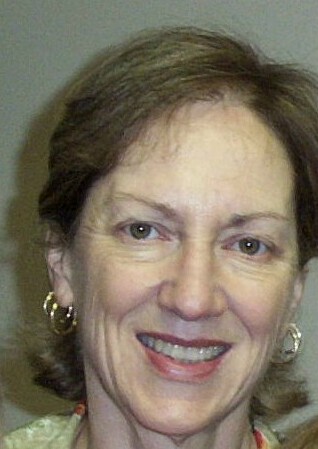
See this calm and relatively-normal-looking (?) image? the appearance of normalcy is misleading. I am mentally ill.
What other explanation can there be? Why else would a retired person wake up at 2:00 AM and be unable to go back to sleep? Was something hurting me? No. Was I worrying about the health of some family member? No. Was I trying to make a difficult decision? No. Was I worrying about the future of our great nation or the outcome of the upcoming presidential election? No. I was not even fixated on the massive amount of housecleaning and organizing that needs doing here in my daily domain.

My mind, that overactive ferret running around and around on its exercise wheel, refused to let me sleep. In spite of all my admonitions and efforts to stop the wheel, it continued rotating. It replayed and analyzed again and again several recent word-formation-related communications and planned a lesson on the value of good Language Arts instruction. I rest my case; I am resigned to the diagnosis - definitely some form of mental illness.

If you, like students sometimes complain, think that there is no practical use for the grammar instruction given in public schools; if you think that it doesn't matter whether you can identify a noun or verb; if you think that studying word stems, prefixes, and suffixes is "busy work", my ferret mind begs to differ with you. Here is one example - the one that looped endlessly through my mind last night.

My mother had her decennial colonoscopy Tuesday. Among the doctor's post-examination comments was this: "She has a very healthy colon with a moderate amount of diverticulosis." I had never studied this medical concept; but I knew what he was talking about because I understand how our language is structured. Here are the language arts skills involved in understanding that communication.

1. Listening. Yes, listening is one of the four "language arts." Good language arts teachers teach all four of the arts - two for dispensing language (writing and speaking) and two for receiving language (reading and listening.) Because of good language arts skills and understandings, I heard the word "diverticulosis." Many people would have heard the more commonly heard word "diverticulitis." There is significant difference.

2. An undertanding of root words and affixes. The words "diverticulum, diverticulosis, and diverticulitis" all start with the word "divert" (to turn away). The word divert is composed of the root word "-vert" which means "turn" and the prefix "di-" meaning "away."

3. An understanding of root words and affixes II. I knew that the word diverticulum comes from the same base as the word divert (to turn away); therefore, in a medical context it must mean a place where contour of a hollow organ is diverted from its usual form.

4. An understanding of root words and affixes III. Because of good understanding of how affixes determine word meaning, I knew that the suffix "-osis" is a medical suffix that indicates the "condition or existence of." So I knew that diverticulosis meant that a diverticulum, or several, exists in her colon. (The suffix "-itis", on the other hand, means "inflamation of." Her diverticula were NOT inflamed.) Total aside: I know how plurals of Latin-based nouns are formed - diverticulum/diverticula.

So I knew, without conscious analysis and without effort, that my mother has some stretched out areas in her colon, but that they are minor and are not inflamed or infected. The value of good language understanding is that this kind of effortless communication (of language received through listening or reading) occurs many times every day and makes like easier.

I am quite aware that this is over-analysis; but it illustrates how gaining a good understanding of language arts, especially when that understanding becomes part of a person early in life, helps one interpret more easily and accurately what he/she hears and reads. My point is that, since language exists for the purpose of communication, one becomes a much better communicator through an understanding of our language structure.

Okay, now that I have that down in writing, perhaps my ferret-brain will let me sleep tonight!